 Image 1 of 2
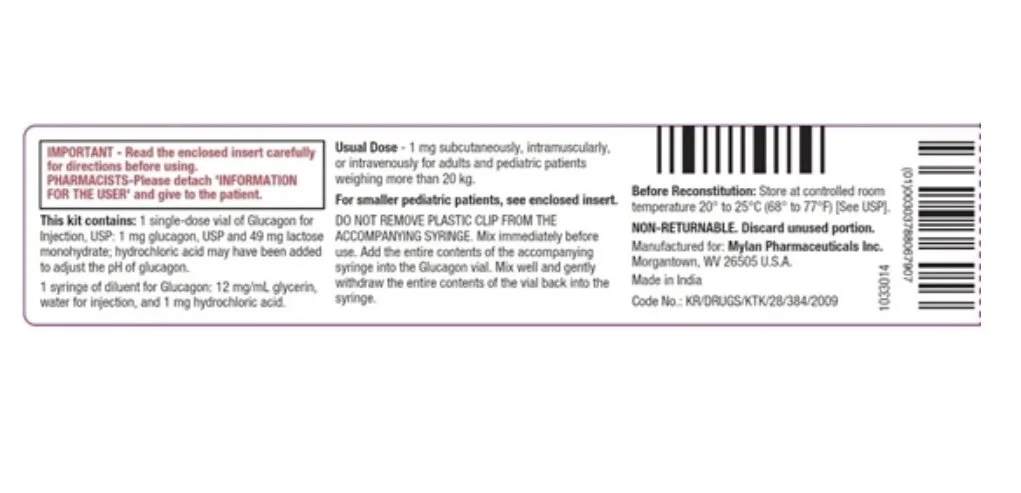 Image 2 of 2
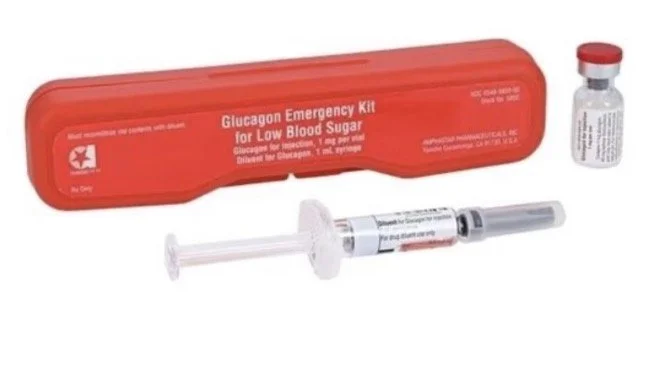
Glucagon Emergency Kit for Low Blood Sugar Injection 1 mg/Vial, Syringe 1 mL — Amphastar Product overview - Purpose: Emergency treatment for severe hypoglycemia (low blood sugar) when the person is unconscious or unable to take oral glucose. - Contents: One 1 mg vial of glucagon for injection and one 1 mL syringe for reconstitution/administration. - Manufacturer: Amphastar Key features - Dose: 1 mg glucagon per vial — standard adult and pediatric emergency dose (pediatric dosing determined by weight; consult healthcare provider). - Ready-to-use syringe included to simplify emergency administration. - For intramuscular (IM) or subcutaneous (SC) injection after reconstitution per instructions. - Single-dose vial; follow local disposal regulations for sharps and medical waste. Indications and usage - Indicated for the emergency treatment of severe hypoglycemia in patients with diabetes when oral carbohydrate intake is not possible. - Administer when a person is unconscious, having a seizure, or otherwise unable to safely swallow glucose. Important administration information - Reconstitution required: Add diluent (provided or as instructed) to the glucagon powder, gently swirl until fully dissolved — do not shake vigorously. - Injection route: Intramuscular or subcutaneous. - Typical adult dose: 1 mg (follow prescriber guidance). - After injection, place the patient on their side to reduce aspiration risk. If the patient does not respond within 10 minutes, a second dose may be administered if recommended by a healthcare provider. - Once the patient regains consciousness and can swallow, provide oral carbohydrates to restore liver glycogen and prevent recurrence. Warnings and precautions - Not effective for hypoglycemia caused by starvation or prolonged fasting. - Patients with insulinoma or pheochromocytoma should use glucagon with caution; consult a healthcare provider. - May cause nausea and vomiting — monitor airway and position patient to prevent aspiration. - Hypokalemia may occur after glucagon administration; monitor electrolytes as clinically indicated. - Allergic reactions (including anaphylaxis) are possible; seek emergency care if severe hypersensitivity occurs. Storage and handling - Store at room temperature as specified on the product label; protect from light. - Do not freeze. Discard if the vial or components show discoloration or particulate matter, or if container is damaged. - Keep out of reach of children. Patient counseling points - Caregivers should be trained on reconstitution and injection technique before an emergency occurs. - Keep kit accessible at all times and replace after use or upon expiration. - After use, seek immediate medical follow-up — transfer to emergency care if needed. Regulatory and safety notes - Prescription product — use under the supervision of a licensed healthcare provider. - Follow local regulations for disposal of syringes and medical waste. For specific dosing, administration instructions, contraindications, and side effects, consult the product prescribing information or a healthcare professional.
Glucagon Emergency Kit for Low Blood Sugar Injection 1 mg/Vial, Syringe 1 mL — Amphastar Product overview - Purpose: Emergency treatment for severe hypoglycemia (low blood sugar) when the person is unconscious or unable to take oral glucose. - Contents: One 1 mg vial of glucagon for injection and one 1 mL syringe for reconstitution/administration. - Manufacturer: Amphastar Key features - Dose: 1 mg glucagon per vial — standard adult and pediatric emergency dose (pediatric dosing determined by weight; consult healthcare provider). - Ready-to-use syringe included to simplify emergency administration. - For intramuscular (IM) or subcutaneous (SC) injection after reconstitution per instructions. - Single-dose vial; follow local disposal regulations for sharps and medical waste. Indications and usage - Indicated for the emergency treatment of severe hypoglycemia in patients with diabetes when oral carbohydrate intake is not possible. - Administer when a person is unconscious, having a seizure, or otherwise unable to safely swallow glucose. Important administration information - Reconstitution required: Add diluent (provided or as instructed) to the glucagon powder, gently swirl until fully dissolved — do not shake vigorously. - Injection route: Intramuscular or subcutaneous. - Typical adult dose: 1 mg (follow prescriber guidance). - After injection, place the patient on their side to reduce aspiration risk. If the patient does not respond within 10 minutes, a second dose may be administered if recommended by a healthcare provider. - Once the patient regains consciousness and can swallow, provide oral carbohydrates to restore liver glycogen and prevent recurrence. Warnings and precautions - Not effective for hypoglycemia caused by starvation or prolonged fasting. - Patients with insulinoma or pheochromocytoma should use glucagon with caution; consult a healthcare provider. - May cause nausea and vomiting — monitor airway and position patient to prevent aspiration. - Hypokalemia may occur after glucagon administration; monitor electrolytes as clinically indicated. - Allergic reactions (including anaphylaxis) are possible; seek emergency care if severe hypersensitivity occurs. Storage and handling - Store at room temperature as specified on the product label; protect from light. - Do not freeze. Discard if the vial or components show discoloration or particulate matter, or if container is damaged. - Keep out of reach of children. Patient counseling points - Caregivers should be trained on reconstitution and injection technique before an emergency occurs. - Keep kit accessible at all times and replace after use or upon expiration. - After use, seek immediate medical follow-up — transfer to emergency care if needed. Regulatory and safety notes - Prescription product — use under the supervision of a licensed healthcare provider. - Follow local regulations for disposal of syringes and medical waste. For specific dosing, administration instructions, contraindications, and side effects, consult the product prescribing information or a healthcare professional.