 Image 1 of 1
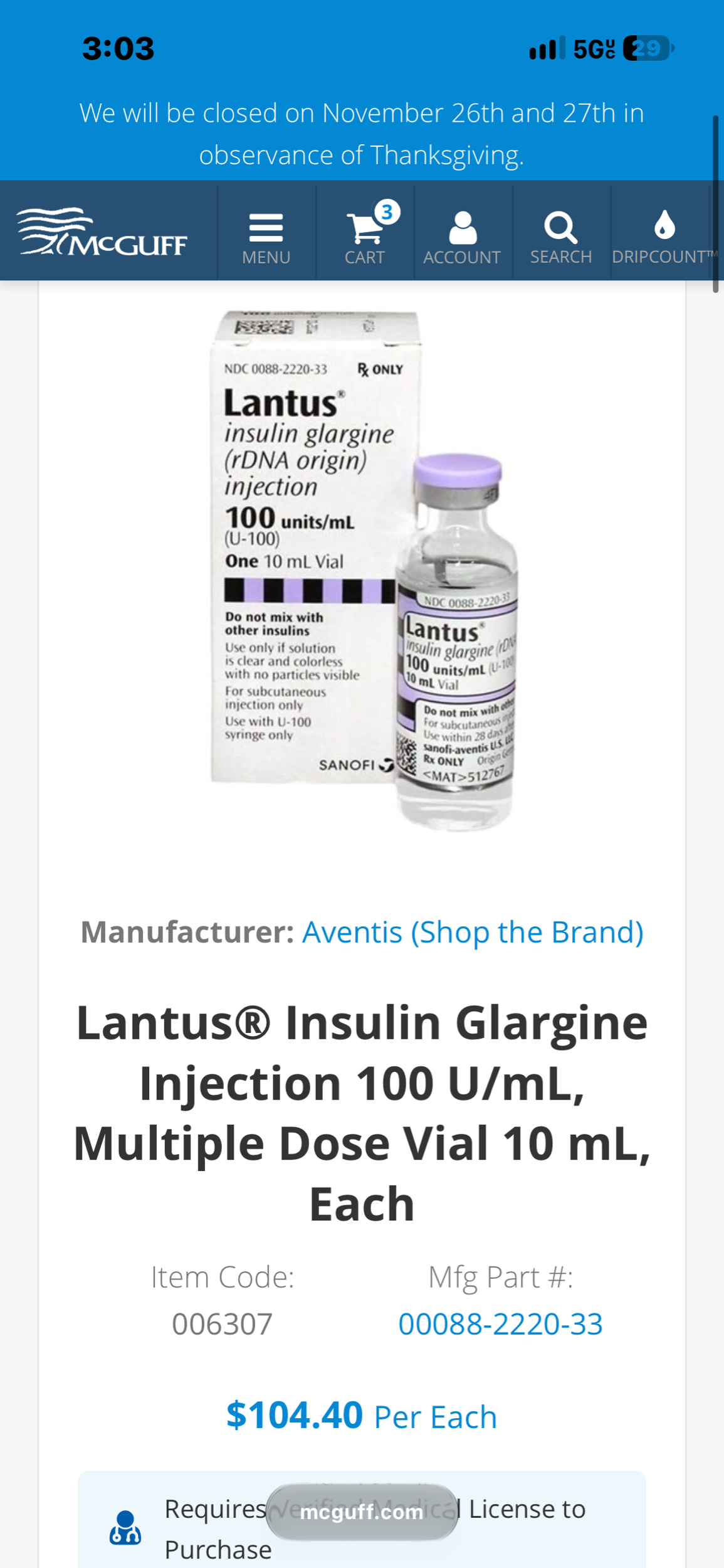
Lantus® (insulin glargine) Injection 100 units/mL Multiple-Dose Vial, 10 mL
Manufacturer: Aventis Product overview -
Active ingredient: insulin glargine, a long-acting basal insulin analog.
Strength: 100 units per mL.
Presentation: 10 mL multiple-dose glass vial for subcutaneous injection.
Indication: For once-daily subcutaneous administration to improve glycemic control in adults and pediatric patients with diabetes mellitus requiring basal insulin. Key features - Long-acting basal insulin designed to provide a relatively steady level of insulin over approximately 24 hours.
Typically administered once daily at the same time each day; timing may be adjusted based on individual treatment needs and physician guidance.
Available as a vial for use with syringes or compatible insulin delivery devices. Dosing and administration (summary) - Dose individualized based on patient’s metabolic needs, blood glucose monitoring results, and concurrent antidiabetic therapy.
Administer subcutaneously in the abdomen, thigh, or upper arm. Do not administer intravenously or via insulin pump. - Do not mix with other insulins in the same syringe or vial. - If a dose is missed, administer it as soon as possible unless it is almost time for the next dose; avoid doubling doses.
Storage - Unopened vials: Refrigerate at 36°F–46°F (2°C–8°C). Do not freeze. Keep in the carton to protect from light. - In-use vial: May be kept at room temperature up to 86°F (30°C) or refrigerated; discard vial after 28 days, even if it still contains insulin. - Protect from excessive heat and direct light. Safety information and precautions - Hypoglycemia is the most common adverse effect; monitor blood glucose regularly and adjust dose, meal plan, or activity to reduce risk. - Use caution in patients with renal or hepatic impairment; dose adjustments may be necessary. - Not for use in patients with hypersensitivity to insulin glargine or any excipients. - Consider risk factors and monitor when used in pregnancy or lactation; consult healthcare provider for individualized management. - Patients should be trained in injection technique, dose titration, and recognition/treatment of hypoglycemia. Adverse reactions (common) - Hypoglycemia - Injection site reactions (pain, redness, swelling) - Weight gain - Allergic reactions (rare) Important counseling points for patients - Review proper injection technique and disposal of needles/syringes. - Emphasize consistent timing of once-daily dosing and regular self-monitoring of blood glucose. - Advise carrying a quick source of glucose for hypoglycemia and educate on symptoms and treatment. - Inform patients to rotate injection sites to reduce the risk of lipodystrophy. - Instruct patients to store unused vials in the refrigerator and discard an opened vial after 28 days. Regulatory and prescribing status - Prescription-only medication. Refer to full prescribing information for comprehensive safety, dosing, contraindications, and drug interaction details. Note: This summary is informational and not a substitute for professional medical advice. For specific prescribing decisions, dosing adjustments, and individualized patient care, consult the full prescribing information and a licensed healthcare provider.