 Image 1 of 1
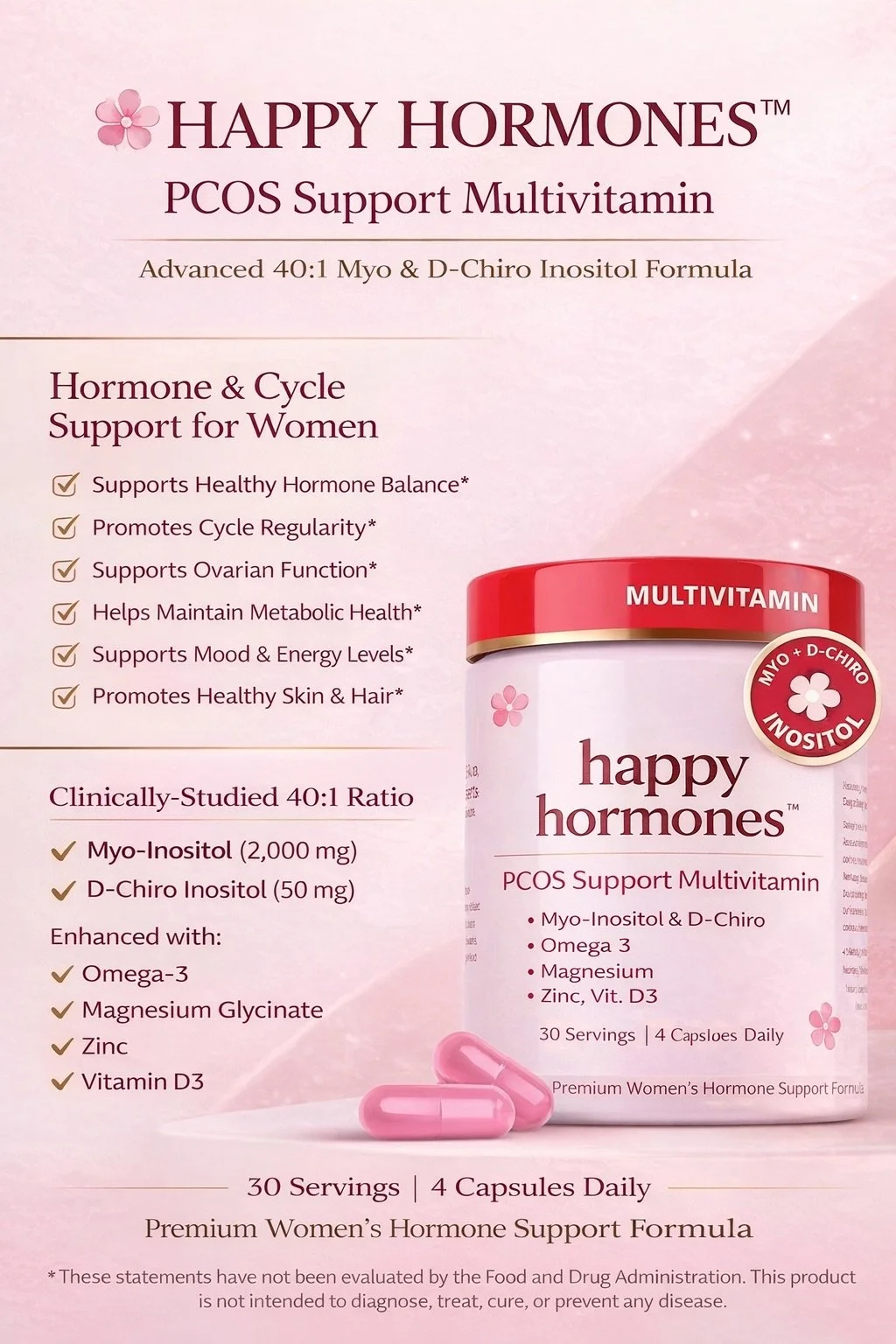
A PCOS-specific multivitamin targets key issues common in polycystic ovary syndrome—insulin resistance, hormonal imbalance, and nutrient deficiencies—by including nutrients that support metabolic health, hormone regulation, and reproductive function.
Key ingredients to look for
Bioavailable B-vitamins: Methylfolate (5-MTHF) and methylcobalamin (B12) are better absorbed and utilized than folic acid and cyanocobalamin, supporting methylation pathways, homocysteine metabolism, and hormonal regulation.
Chelated zinc: Zinc in chelated form (e.g., zinc bisglycinate) has higher absorption and may help reduce excess androgen activity and support skin and hair health.
Vitamin D3: Vitamin D deficiency is common in PCOS; D3 supports insulin sensitivity, immune regulation, and reproductive hormone balance.
Myo-inositol and D-chiro-inositol: These insulin-sensitizing compounds often used in a 40:1 ratio can improve ovulatory function and metabolic markers.
Magnesium: Important for insulin sensitivity, sleep, and mood; magnesium glycinate or citrate are well absorbed.
Omega-3s or EPA/DHA: Anti-inflammatory effects can help with metabolic and hormonal balance.
Chromium: Chromium picolinate may help improve insulin sensitivity and glucose metabolism.
Antioxidants: Vitamins C and E and compounds like N-acetylcysteine (NAC) can reduce oxidative stress associated with PCOS.
Selenium: Supports thyroid health and antioxidant defenses; useful if thyroid function is a concern.
Formulation tips
Choose bioavailable mineral forms (chelated zinc, magnesium glycinate) to improve tolerance and absorption.
Avoid excessive iron unless deficiency is documented—many with PCOS and normal cycles do not need extra iron and could be harmed by excess.
Check dosages against professional guidelines and individual needs; some nutrients (e.g., vitamin D, B12) are best dosed based on blood levels.
Consider separate targeted products (e.g., myo-inositol + folate) if a single multivitamin cannot provide therapeutic doses without exceeding safe limits of other nutrients.
Safety and personalization
Have vitamin D, B12, iron, and thyroid labs checked before supplementing high doses.
Discuss chelated zinc and other mineral supplements with a healthcare provider if taking medications (e.g., antibiotics, levothyroxine) or if pregnant/planning pregnancy.
Supplements can support but do not replace medical treatment for PCOS; coordinate use with a clinician for insulin resistance, metabolic risks, and fertility goals.
Look for third-party testing and transparent labeling to ensure potency and purity.
All peptides, GLP-1 medications, hormone therapies, and other pharmacy products are sourced from licensed 503A and/or 503B compounding pharmacies.
The statements regarding these products have not been evaluated by the Food and Drug Administration. These products are not intended to diagnose, treat, cure, or prevent any disease.
Products may be provided for cosmetic, wellness, or compounded use where applicable. Individual results may vary. It is the customer’s responsibility to consult with a qualified healthcare professional prior to use.
By purchasing from this site, you agree that you are doing so at your own discretion and risk. We are not liable for misuse, adverse reactions, or outcomes resulting from the use of any products.
A PCOS-specific multivitamin targets key issues common in polycystic ovary syndrome—insulin resistance, hormonal imbalance, and nutrient deficiencies—by including nutrients that support metabolic health, hormone regulation, and reproductive function.
Key ingredients to look for
Bioavailable B-vitamins: Methylfolate (5-MTHF) and methylcobalamin (B12) are better absorbed and utilized than folic acid and cyanocobalamin, supporting methylation pathways, homocysteine metabolism, and hormonal regulation.
Chelated zinc: Zinc in chelated form (e.g., zinc bisglycinate) has higher absorption and may help reduce excess androgen activity and support skin and hair health.
Vitamin D3: Vitamin D deficiency is common in PCOS; D3 supports insulin sensitivity, immune regulation, and reproductive hormone balance.
Myo-inositol and D-chiro-inositol: These insulin-sensitizing compounds often used in a 40:1 ratio can improve ovulatory function and metabolic markers.
Magnesium: Important for insulin sensitivity, sleep, and mood; magnesium glycinate or citrate are well absorbed.
Omega-3s or EPA/DHA: Anti-inflammatory effects can help with metabolic and hormonal balance.
Chromium: Chromium picolinate may help improve insulin sensitivity and glucose metabolism.
Antioxidants: Vitamins C and E and compounds like N-acetylcysteine (NAC) can reduce oxidative stress associated with PCOS.
Selenium: Supports thyroid health and antioxidant defenses; useful if thyroid function is a concern.
Formulation tips
Choose bioavailable mineral forms (chelated zinc, magnesium glycinate) to improve tolerance and absorption.
Avoid excessive iron unless deficiency is documented—many with PCOS and normal cycles do not need extra iron and could be harmed by excess.
Check dosages against professional guidelines and individual needs; some nutrients (e.g., vitamin D, B12) are best dosed based on blood levels.
Consider separate targeted products (e.g., myo-inositol + folate) if a single multivitamin cannot provide therapeutic doses without exceeding safe limits of other nutrients.
Safety and personalization
Have vitamin D, B12, iron, and thyroid labs checked before supplementing high doses.
Discuss chelated zinc and other mineral supplements with a healthcare provider if taking medications (e.g., antibiotics, levothyroxine) or if pregnant/planning pregnancy.
Supplements can support but do not replace medical treatment for PCOS; coordinate use with a clinician for insulin resistance, metabolic risks, and fertility goals.
Look for third-party testing and transparent labeling to ensure potency and purity.
All peptides, GLP-1 medications, hormone therapies, and other pharmacy products are sourced from licensed 503A and/or 503B compounding pharmacies.
The statements regarding these products have not been evaluated by the Food and Drug Administration. These products are not intended to diagnose, treat, cure, or prevent any disease.
Products may be provided for cosmetic, wellness, or compounded use where applicable. Individual results may vary. It is the customer’s responsibility to consult with a qualified healthcare professional prior to use.
By purchasing from this site, you agree that you are doing so at your own discretion and risk. We are not liable for misuse, adverse reactions, or outcomes resulting from the use of any products.