 Image 1 of 4
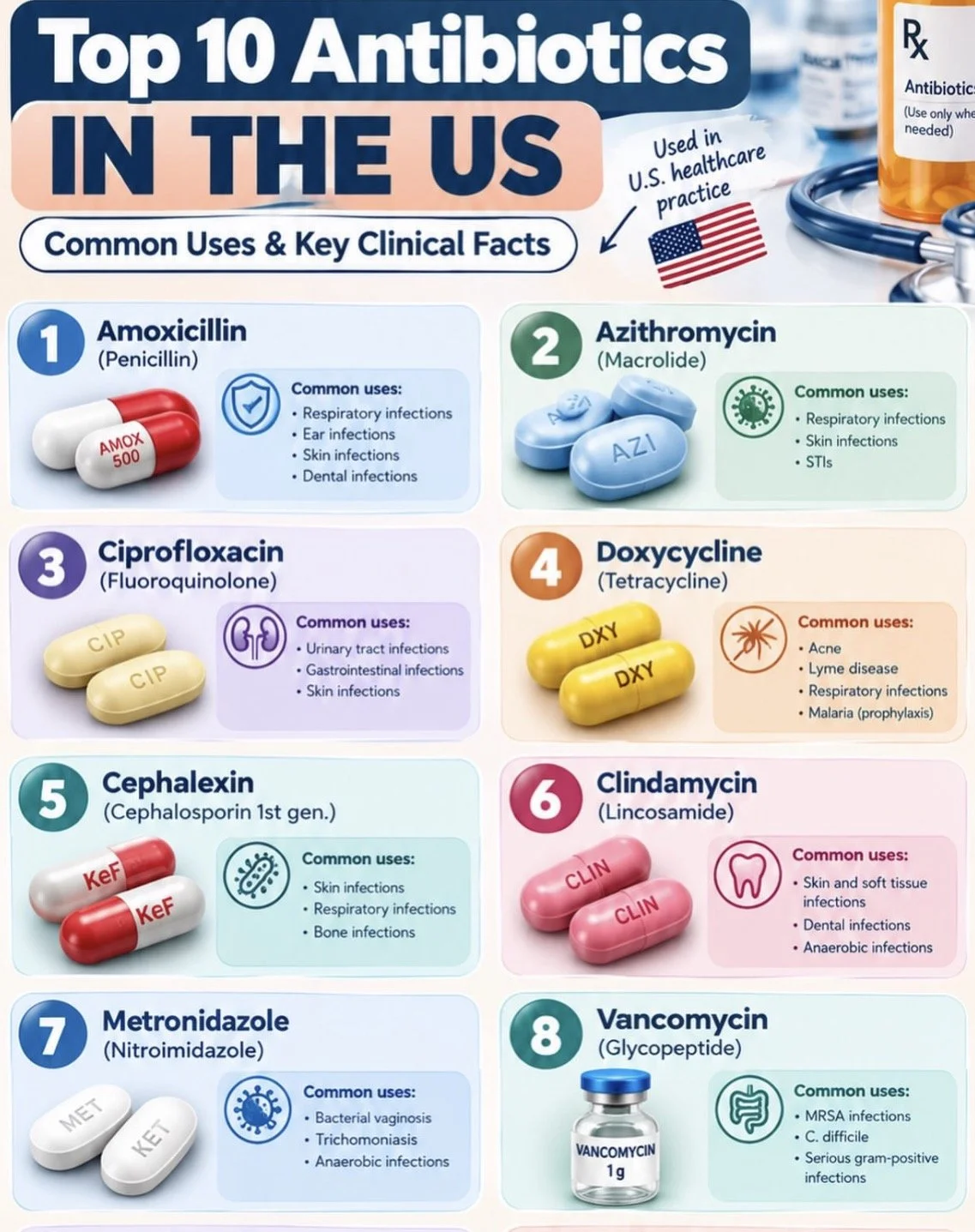 Image 2 of 4
Image 3 of 4
Image 4 of 4
Image 2 of 4
Image 3 of 4
Image 4 of 4
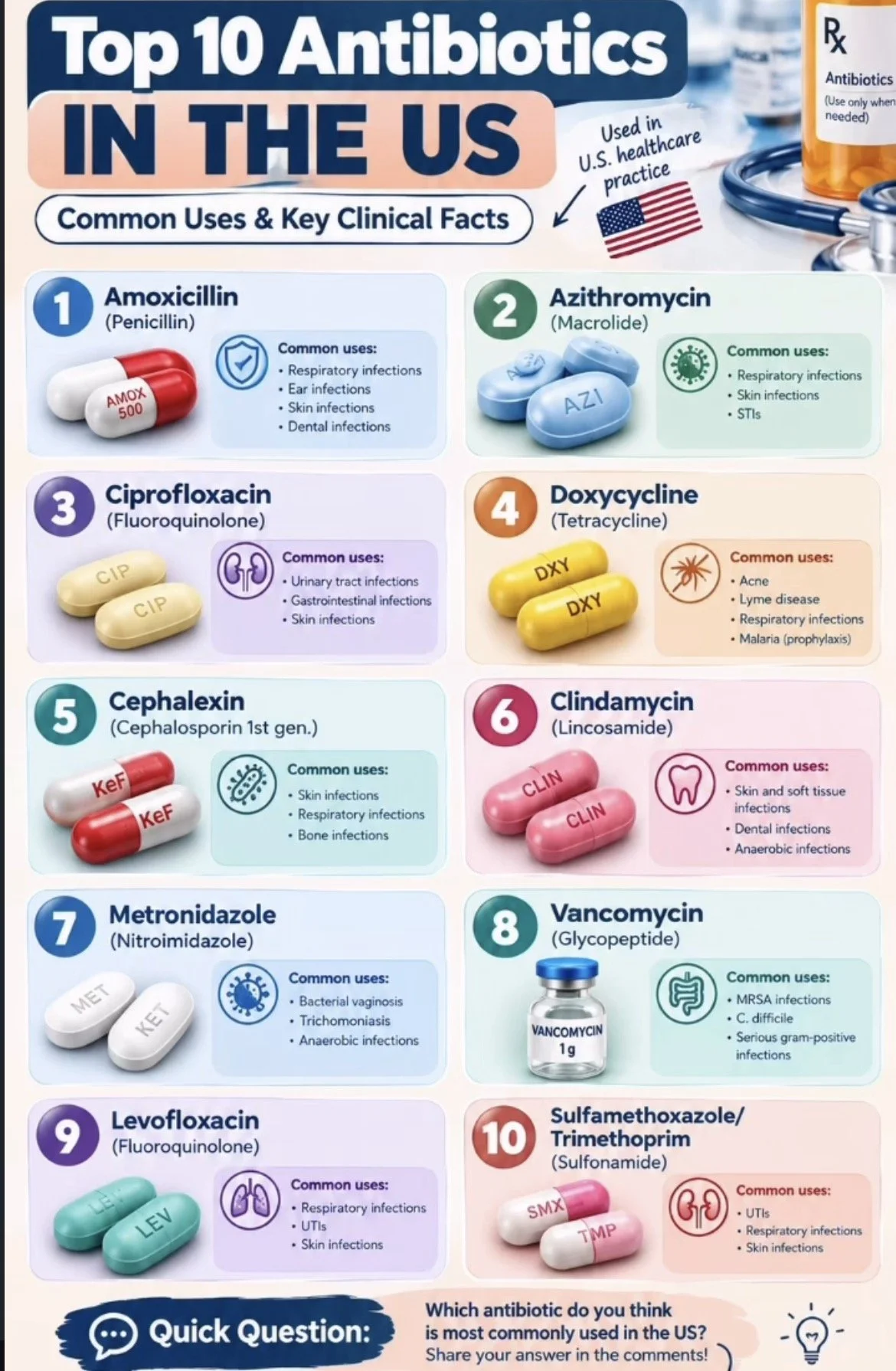
Antibiotics What they are - Antibiotics are medications that kill or inhibit the growth of bacteria. They are used to treat bacterial infections and do not work against viruses (e.g., colds, influenza). Common classes and examples - Penicillins: amoxicillin, penicillin VK - Cephalosporins: cefalexin (cephalexin), cefuroxime - Macrolides: azithromycin, clarithromycin - Fluoroquinolones: ciprofloxacin, levofloxacin - Tetracyclines: doxycycline, tetracycline - Sulfonamides: trimethoprim-sulfamethoxazole (TMP-SMX) - Glycopeptides: vancomycin - Aminoglycosides: gentamicin, amikacin - Carbapenems: meropenem, imipenem When they’re used - Bacterial infections such as: - Skin and soft tissue infections (cellulitis, abscess) - Respiratory tract infections when bacterial: bacterial pneumonia, streptococcal pharyngitis - Urinary tract infections - Certain sexually transmitted infections (e.g., chlamydia, gonorrhea) - Bone and joint infections - Sepsis and other serious invasive infections (hospital setting) Appropriate use - Only use when prescribed by a clinician for a confirmed or strongly suspected bacterial infection. - Take the exact dose and complete the full prescribed course, even if symptoms improve, unless a clinician advises stopping. - Do not use leftover antibiotics or someone else’s prescription. Risks and side effects - Common: gastrointestinal upset (nausea, diarrhea), yeast infections - Serious but less common: allergic reactions (including anaphylaxis), Clostridioides difficile infection (severe antibiotic-associated diarrhea), tendonitis/tendon rupture (notably with some fluoroquinolones), QT prolongation (with some macrolides and fluoroquinolones), kidney or liver toxicity (with certain agents) - Antibiotic interactions: can interact with other drugs (e.g., warfarin, oral contraceptives, antacids). Discuss medications with your prescriber. Antibiotic resistance - Misuse and overuse of antibiotics promote resistance, making future infections harder to treat. - Practices that reduce resistance: - Prescribe only when necessary - Use the right antibiotic at the right dose for the right duration - Complete prescribed courses - Infection prevention: vaccination, hand hygiene, safe food handling Special considerations - Allergy: report any penicillin or other antibiotic allergies. Many reported penicillin “allergies” are not true IgE-mediated allergies; testing may be available. - Pregnancy and breastfeeding: some antibiotics are safe, others are contraindicated. Always inform providers if pregnant or breastfeeding. - Children: dosing and choices differ from adults; follow pediatric guidance. - Surgical prophylaxis: short-course antibiotics may be used to prevent surgical-site infections when indicated. What to do if you think you need antibiotics - See a healthcare provider for evaluation and, when appropriate, diagnostic testing (e.g., cultures, rapid strep test, imaging). - Ask about the diagnosis, why an antibiotic is or isn’t recommended, expected duration, potential side effects, and signs that warrant urgent reassessment. - If a prescription is given, clarify dosing schedule, duration, and whether follow-up is needed. Disposal - Do not keep unused antibiotics for future use. Return unused medications to a take-back program or follow local disposal guidelines. If you have specific questions about a condition, medication, allergies, or an antibiotic you were prescribed, provide details and I can give more tailored information.
Please read before placing your order.
Orders may be purchased through our website; however, all medications and peptides are subject to review and approval by a qualified healthcare provider. A Good Faith Exam (GFE) is required every 3 months to maintain eligibility and comply with applicable weight-loss program requirements in your area.
The GFE typically takes approximately 15–20 minutes to complete.
Once completed, the medical review and approval process may take up to 1 full business day in some cases.
Completion of a GFE does not guarantee approval. Final approval is determined by the appropriate healthcare provider based on your medical information and applicable requirements.
A new GFE may be required every 3 months to remain active in the program.
Placing an order does not guarantee that you will be approved for treatment.
If you are not approved by the healthcare provider, your payment will be released/refunded within approximately 3–10 business days. The exact timing may vary depending on your bank or payment provider.
Products are dispensed through appropriately licensed 503A and/or 503B pharmacies, as applicable.
Important: Any statement that products are “FDA approved” should be used only where that statement is legally and factually accurate for the specific medication and formulation being provided. FDA approval of an active ingredient or a commercially available product does not necessarily mean that every compounded preparation containing that ingredient is FDA-approved.
This website notice is intended as general program information and does not replace medical advice, a healthcare provider's evaluation, or applicable federal, state, or local requirements.
Antibiotics What they are - Antibiotics are medications that kill or inhibit the growth of bacteria. They are used to treat bacterial infections and do not work against viruses (e.g., colds, influenza). Common classes and examples - Penicillins: amoxicillin, penicillin VK - Cephalosporins: cefalexin (cephalexin), cefuroxime - Macrolides: azithromycin, clarithromycin - Fluoroquinolones: ciprofloxacin, levofloxacin - Tetracyclines: doxycycline, tetracycline - Sulfonamides: trimethoprim-sulfamethoxazole (TMP-SMX) - Glycopeptides: vancomycin - Aminoglycosides: gentamicin, amikacin - Carbapenems: meropenem, imipenem When they’re used - Bacterial infections such as: - Skin and soft tissue infections (cellulitis, abscess) - Respiratory tract infections when bacterial: bacterial pneumonia, streptococcal pharyngitis - Urinary tract infections - Certain sexually transmitted infections (e.g., chlamydia, gonorrhea) - Bone and joint infections - Sepsis and other serious invasive infections (hospital setting) Appropriate use - Only use when prescribed by a clinician for a confirmed or strongly suspected bacterial infection. - Take the exact dose and complete the full prescribed course, even if symptoms improve, unless a clinician advises stopping. - Do not use leftover antibiotics or someone else’s prescription. Risks and side effects - Common: gastrointestinal upset (nausea, diarrhea), yeast infections - Serious but less common: allergic reactions (including anaphylaxis), Clostridioides difficile infection (severe antibiotic-associated diarrhea), tendonitis/tendon rupture (notably with some fluoroquinolones), QT prolongation (with some macrolides and fluoroquinolones), kidney or liver toxicity (with certain agents) - Antibiotic interactions: can interact with other drugs (e.g., warfarin, oral contraceptives, antacids). Discuss medications with your prescriber. Antibiotic resistance - Misuse and overuse of antibiotics promote resistance, making future infections harder to treat. - Practices that reduce resistance: - Prescribe only when necessary - Use the right antibiotic at the right dose for the right duration - Complete prescribed courses - Infection prevention: vaccination, hand hygiene, safe food handling Special considerations - Allergy: report any penicillin or other antibiotic allergies. Many reported penicillin “allergies” are not true IgE-mediated allergies; testing may be available. - Pregnancy and breastfeeding: some antibiotics are safe, others are contraindicated. Always inform providers if pregnant or breastfeeding. - Children: dosing and choices differ from adults; follow pediatric guidance. - Surgical prophylaxis: short-course antibiotics may be used to prevent surgical-site infections when indicated. What to do if you think you need antibiotics - See a healthcare provider for evaluation and, when appropriate, diagnostic testing (e.g., cultures, rapid strep test, imaging). - Ask about the diagnosis, why an antibiotic is or isn’t recommended, expected duration, potential side effects, and signs that warrant urgent reassessment. - If a prescription is given, clarify dosing schedule, duration, and whether follow-up is needed. Disposal - Do not keep unused antibiotics for future use. Return unused medications to a take-back program or follow local disposal guidelines. If you have specific questions about a condition, medication, allergies, or an antibiotic you were prescribed, provide details and I can give more tailored information.
Please read before placing your order.
Orders may be purchased through our website; however, all medications and peptides are subject to review and approval by a qualified healthcare provider. A Good Faith Exam (GFE) is required every 3 months to maintain eligibility and comply with applicable weight-loss program requirements in your area.
The GFE typically takes approximately 15–20 minutes to complete.
Once completed, the medical review and approval process may take up to 1 full business day in some cases.
Completion of a GFE does not guarantee approval. Final approval is determined by the appropriate healthcare provider based on your medical information and applicable requirements.
A new GFE may be required every 3 months to remain active in the program.
Placing an order does not guarantee that you will be approved for treatment.
If you are not approved by the healthcare provider, your payment will be released/refunded within approximately 3–10 business days. The exact timing may vary depending on your bank or payment provider.
Products are dispensed through appropriately licensed 503A and/or 503B pharmacies, as applicable.
Important: Any statement that products are “FDA approved” should be used only where that statement is legally and factually accurate for the specific medication and formulation being provided. FDA approval of an active ingredient or a commercially available product does not necessarily mean that every compounded preparation containing that ingredient is FDA-approved.
This website notice is intended as general program information and does not replace medical advice, a healthcare provider's evaluation, or applicable federal, state, or local requirements.