
 Image 1 of 1
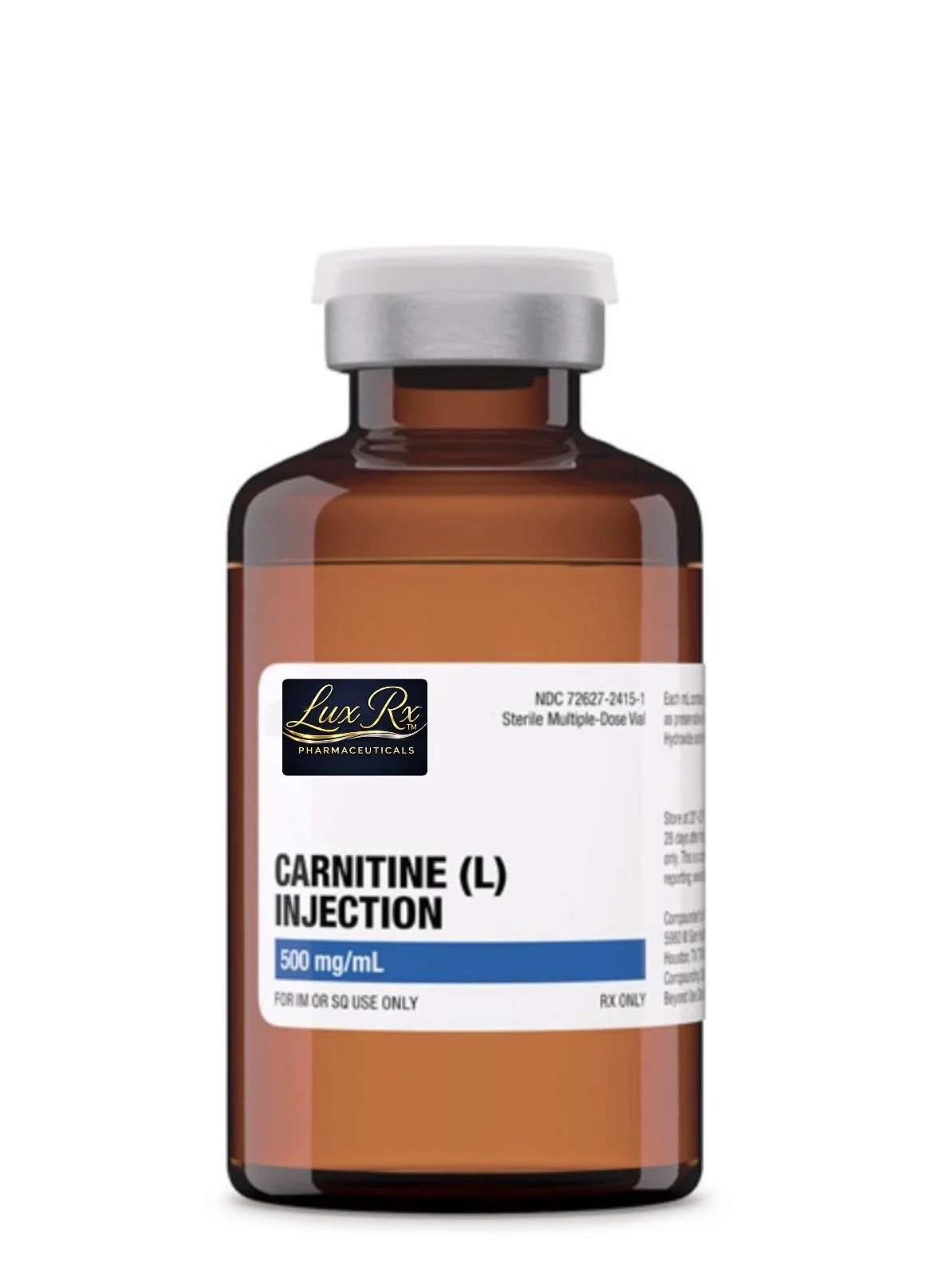
concentrated solutions administered intramuscularly (IM) or intravenously (IV) to optimize fatty acid metabolism. By bypassing the digestive tract, injections achieve immediate peak plasma levels, avoiding the low bioavailability (typically under 15%) and gastrointestinal side effects associated with high-dose oral supplements.
🧬 Mechanism of Action: The Cellular Shuttle
L-carnitine acts as an obligatory cofactor that transports long-chain fatty acids across the inner mitochondrial membrane. Inside the mitochondria, these fats undergo beta-oxidation to produce adenosine triphosphate (ATP), the primary energy currency of the cell. Without adequate carnitine, fatty acids cannot efficiently enter the mitochondria to be burned for fuel.
Primary Clinical & Performance Uses
Fat Loss & Metabolic Rate: Frequently used in medical weight loss protocols to enhance fat oxidation and metabolic efficiency, especially when paired with regular exercise.
Athletic Performance & Recovery: Athletes utilize L-carnitine injections to increase VO2 max, delay the onset of lactic acid accumulation, reduce muscle soreness, and preserve muscle glycogen reserves during intense training.
Androgen Receptor Density: Clinical data suggests L-carnitine supplementation can upregulate androgen receptor density in muscle tissue, potentially enhancing the body's natural response to testosterone for muscle repair.
Medical Deficiency: Formally indicated to treat primary carnitine deficiency (genetic disorders) or secondary deficiency caused by chronic kidney disease, hemodialysis, or specific anticonvulsant therapies.
concentrated solutions administered intramuscularly (IM) or intravenously (IV) to optimize fatty acid metabolism. By bypassing the digestive tract, injections achieve immediate peak plasma levels, avoiding the low bioavailability (typically under 15%) and gastrointestinal side effects associated with high-dose oral supplements.
🧬 Mechanism of Action: The Cellular Shuttle
L-carnitine acts as an obligatory cofactor that transports long-chain fatty acids across the inner mitochondrial membrane. Inside the mitochondria, these fats undergo beta-oxidation to produce adenosine triphosphate (ATP), the primary energy currency of the cell. Without adequate carnitine, fatty acids cannot efficiently enter the mitochondria to be burned for fuel.
Primary Clinical & Performance Uses
Fat Loss & Metabolic Rate: Frequently used in medical weight loss protocols to enhance fat oxidation and metabolic efficiency, especially when paired with regular exercise.
Athletic Performance & Recovery: Athletes utilize L-carnitine injections to increase VO2 max, delay the onset of lactic acid accumulation, reduce muscle soreness, and preserve muscle glycogen reserves during intense training.
Androgen Receptor Density: Clinical data suggests L-carnitine supplementation can upregulate androgen receptor density in muscle tissue, potentially enhancing the body's natural response to testosterone for muscle repair.
Medical Deficiency: Formally indicated to treat primary carnitine deficiency (genetic disorders) or secondary deficiency caused by chronic kidney disease, hemodialysis, or specific anticonvulsant therapies.